
Futuring-in-Context
Zambia, a land-linked country in southern Africa, housing around 18 million people, mostly under 25. Despite grappling with high unemployment, poverty, and limited education and healthcare access, Zambian youth are actively involved in sectors like agriculture, mining, and services. Many venture into entrepreneurship, though a sizable portion still faces joblessness. The government aids youth through initiatives like the Youth Empowerment Fund and youth centers offering training and mentorship. NGOs and CSOs also contribute by providing education, mentorship, and advocacy platforms like the Zambian Youth Platform. However, challenges persist, especially in rural areas lacking basic services. Collaborative efforts are crucial to ensure youth’s full potential and sustainable national development.
Country partners and participants
Futures Literacy Lab
Zambia Polak Game
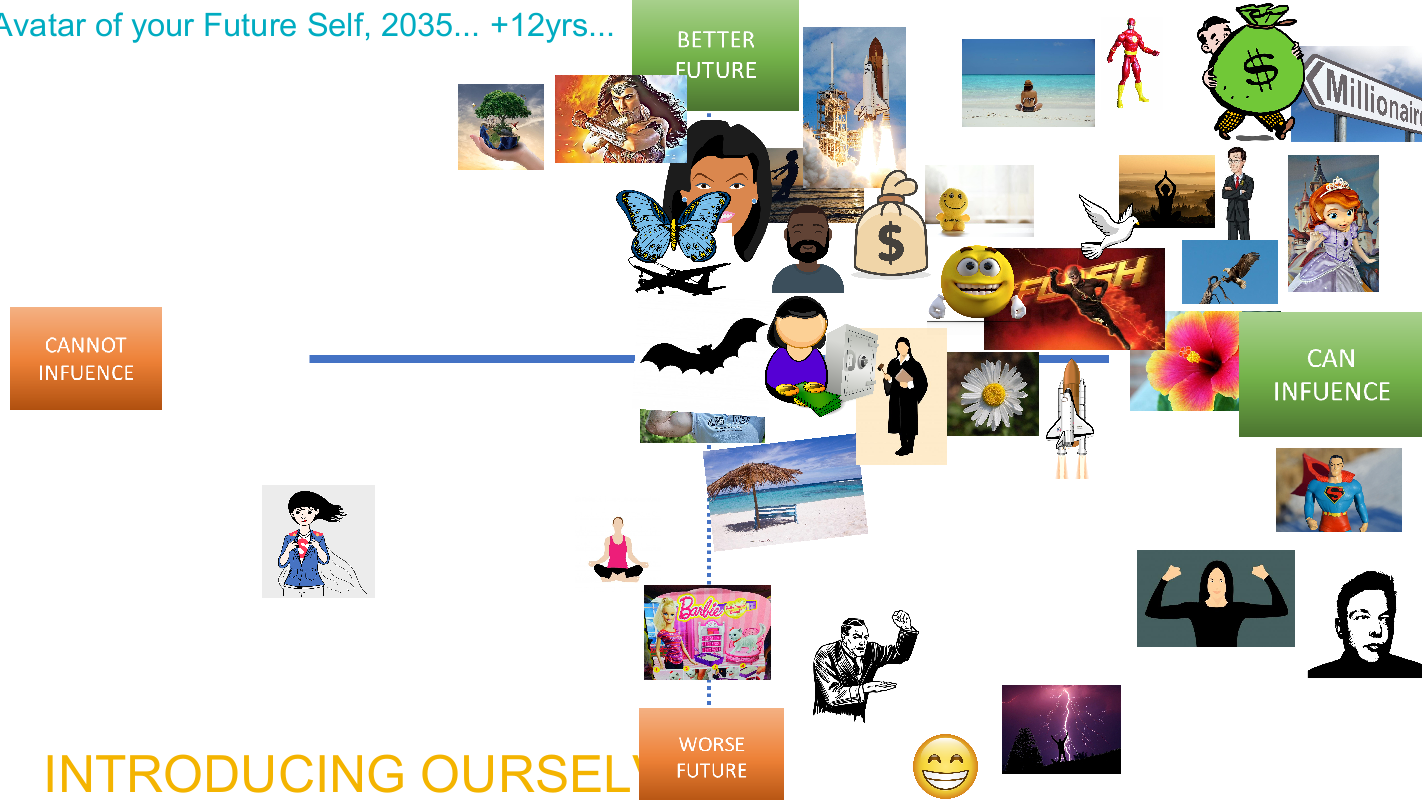
Our first experiment in the Futures Literacy Lab was designed to explore futures orientations. Zambian youth were invited to share if they thought the futures would be better or worse, and choose an avatar that represents them in the year 2035. Most Zambian youth felt they could influence the futures. Predominant images included superheroes, nature and wildlife, and money.
Probable Futures 2035
Youth BOOM…or Bust?

Young Zambians continue to contend with the starkly prevalent realities of poverty, politics, and pessimism. Yet, there is also an ever-growing contingency of youth who are taking a more proactive approach to effecting change and aspire to galvanize their peers. Will the youth demographic boom catalyze a tipping point where strength in numbers can shift perceptions, collective narratives around youth, and meaningful action on social justice?
Desirable Futures 2035
“Imiti ikula empanga”
(Young trees are the future forest)

With resources directed towards addressing mental health and unemployment, Zambian youth are coming of age in environments that nurture tolerance, broad-reaching access, and civility. As a result, strong roots are growing and intertwining for more fertile Zambian youth future possibilities. It’s a marvel to behold the shift from a youth infantilized to strong, independent – and interdependent – decision-makers.
Reframe: “No More Government?”

One day in 2035, citizens have awoken to find that all of the government institutions had suddenly disappeared, as if into thin air. How will their society meet the needs of the population when left to fend for and figuring things out themselves?
Imagining the dawn of a new day for Zambian youth possibilities…
“We are born into this world and we just find all of these systems in place – we don’t really question them. What is our ability to imagine things outside of those systems?” – a youth participant
When Zambian participants found themselves in 2035 where suddenly there was “No More Government”, expanded imaginaries unearthed new metaphors such as “Roots & Fruits”, “Back to the Future”, and “No Man is an Island”. In considering how life might unfold in an “undefined society”, free of imposed systems, liberated youth would reconnect with their innate personal power and sense of worthiness, and together form societies truly built on Ubuntu values.

Enjoy a glimpse into our vibrant workshop spaces

Emerging Policy Issues Raised by Youth
Zambia Vision 2035

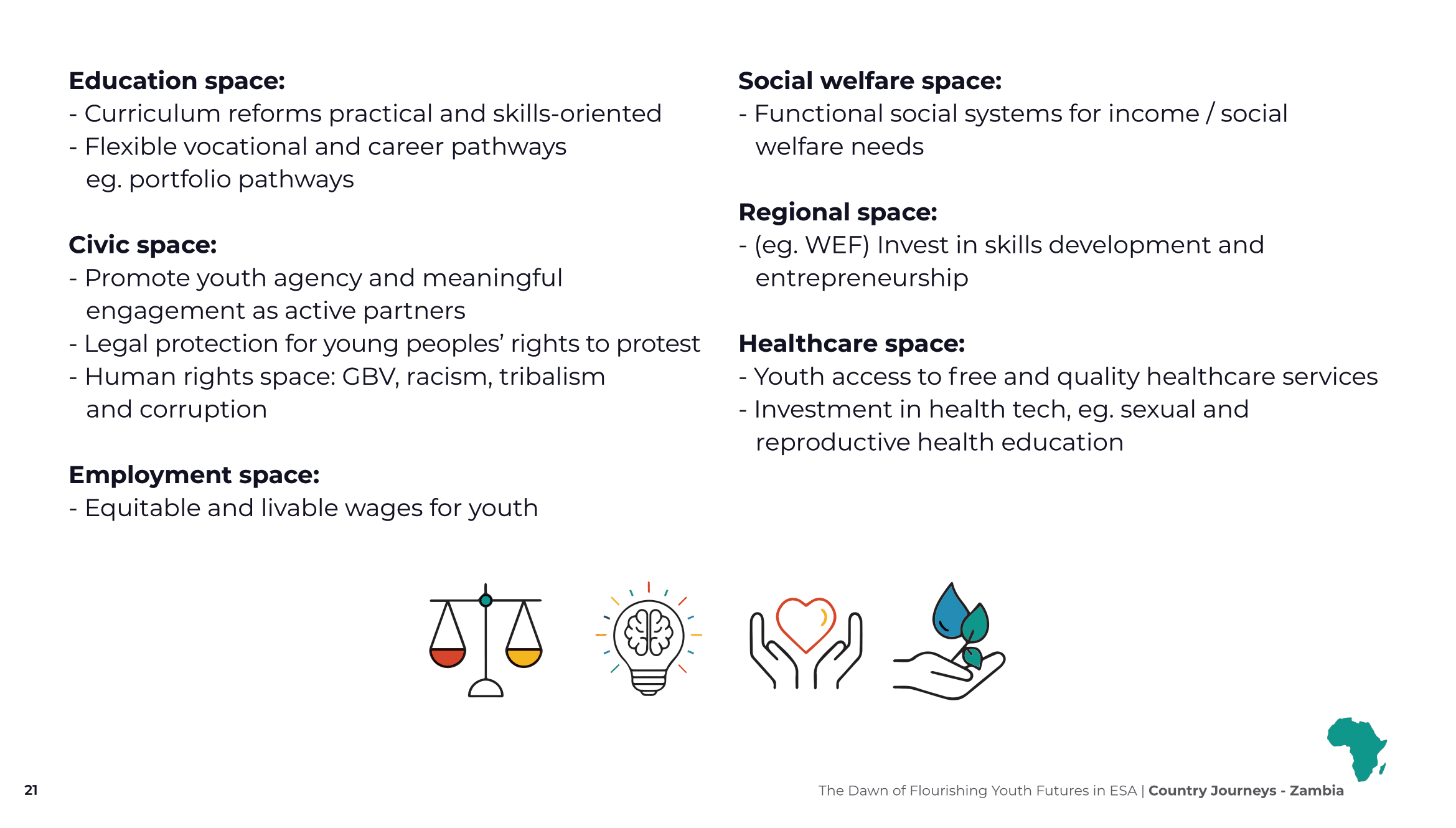
In 2023, Zambia faced formidable challenges, including weakened checks and balances, high unemployment, and an ailing education system. Amidst these difficulties, the Kectil Center for Youth Excellence, a beacon of hope, provided leadership training, while initiatives like the Peer-to-Peer counseling system and the Progressive Youth Organization tackled mental health issues. Restless Development Zambia’s “TUSUNGE LUBONO” project and a groundbreaking re-entry programme for young girls further contributed to positive change. Skill enhancement programmes, gender equality measures, and free education initiatives marked a transformative period. Retaining key aspects of its past, Zambia cultivated a society based on Ubuntu principles, fostering unity and compassion. This era witnessed the fading of mental health issues, productive youth engagement, and a revitalized education system, portraying a bold and hopeful future for Zambia.