Futuring-in-Context
The education, skills, and TVET sector lacks a systematic approach to anticipating and addressing complex changes, leaving policymakers overwhelmed by immediate concerns and tethered to outdated ideologies around education and livelihoods. This narrow focus hampers the ability to prepare youth for ESA’s rapidly evolving societal and economic landscapes. This lack of anticipatory governance capabilities necessitates a youth-led reimagining of flourishing livelihoods to enable inclusive, just, and equitable futures for all Africans.
Research Method:
Futures Literacy Labs (FLLs)
Futures Literacy Labs are an experimental approach that facilitate the exploration of human anticipation. Over the course of four phases they help participants to become aware, analyse, and overcome their biases and assumptions about the future. FLLs catalyse creative imagination and foster sustainable capacities for novelty, adaptability and a different sense of hope and agency.
According to UNESCO, Futures Literacy is a skill that allows people to better understand the role that the future plays in what they see and do. The future is an imaginative space: we can only imagine it because it doesn’t exist yet. By developing our capacities to overcome fears about uncertainty and challenging our future expectations, we also develop the ability to anticipate the future for various purposes and in various contexts
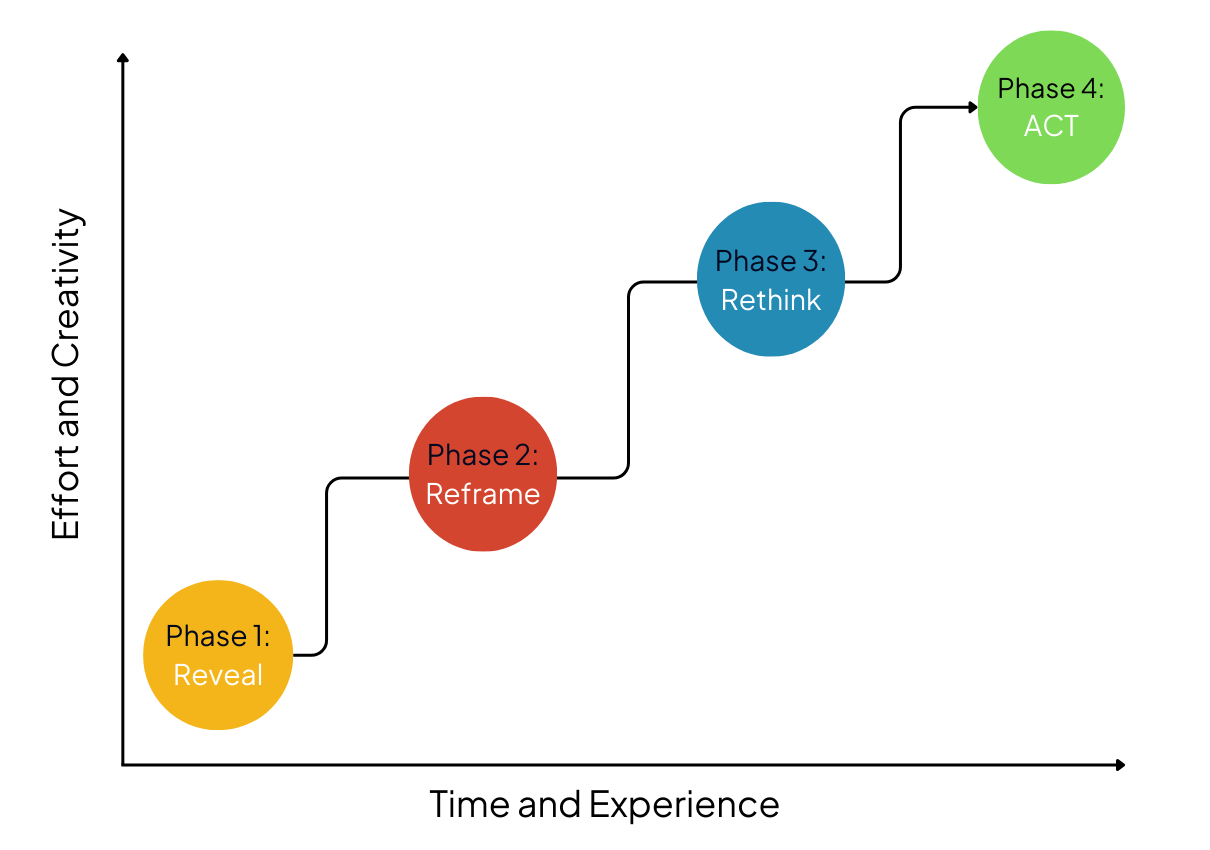
FLL: A Journey in 4 Phases
In the FL Lab:
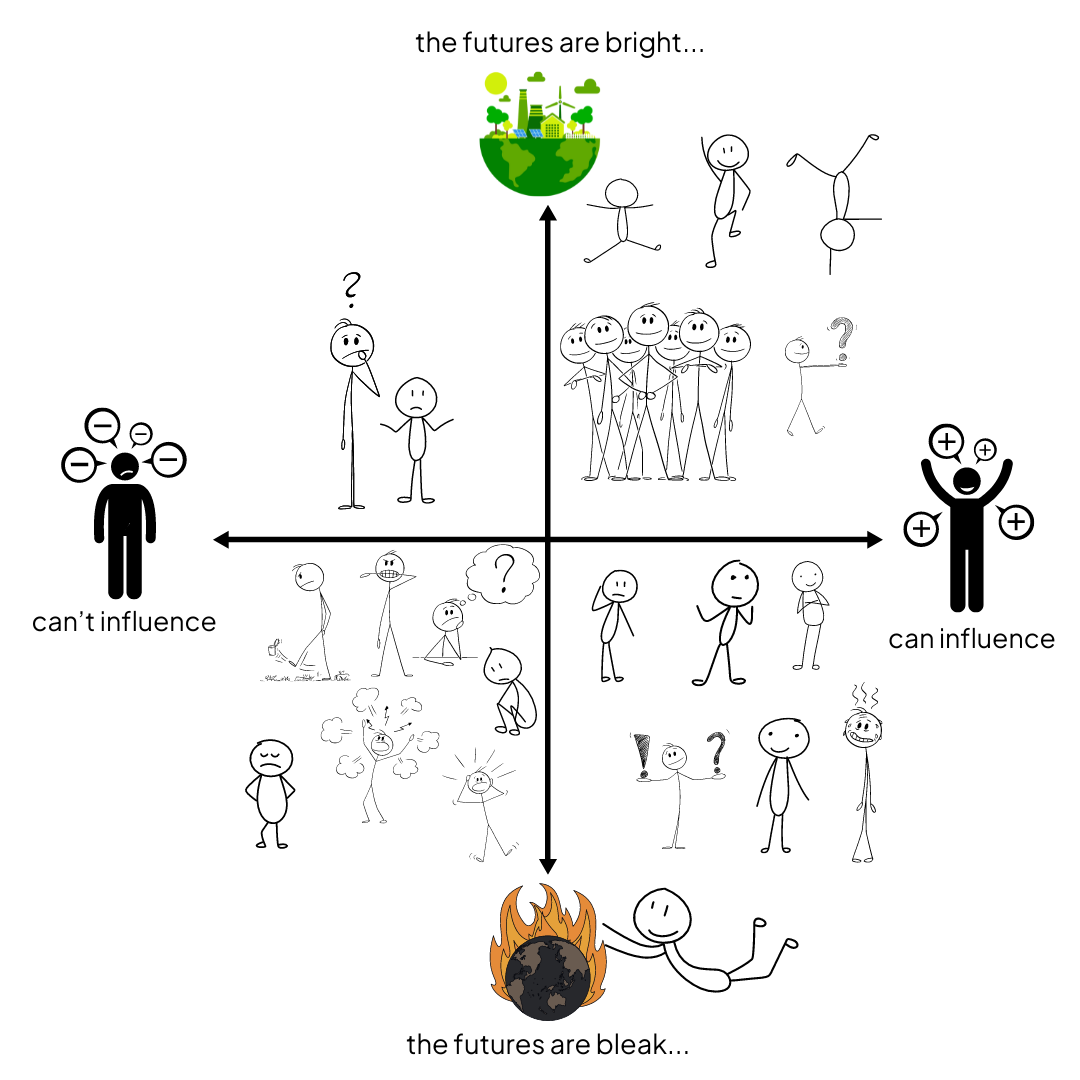
Polak Game
Where do you stand?
Do you think the future will be better or worse?
How much do you think you can effect the changes you want to see in the world?”
Created by Peter Hayward and Joseph Voros, and further developed with Stuart Candy, The Polak Game – or Where Do You Stand? – is inspired by a seminal book in Futures Studies, “The Image of the Future” by Dutch sociologist, Frederik Polak (1961). The activity can serve as an “icebreaker” and often provokes meaningful reflections and sharing of different perspectives on the role of humans’ perceived optimism/pessimism regarding the state of the world and sense of agency to affect change.
In the FL Lab:
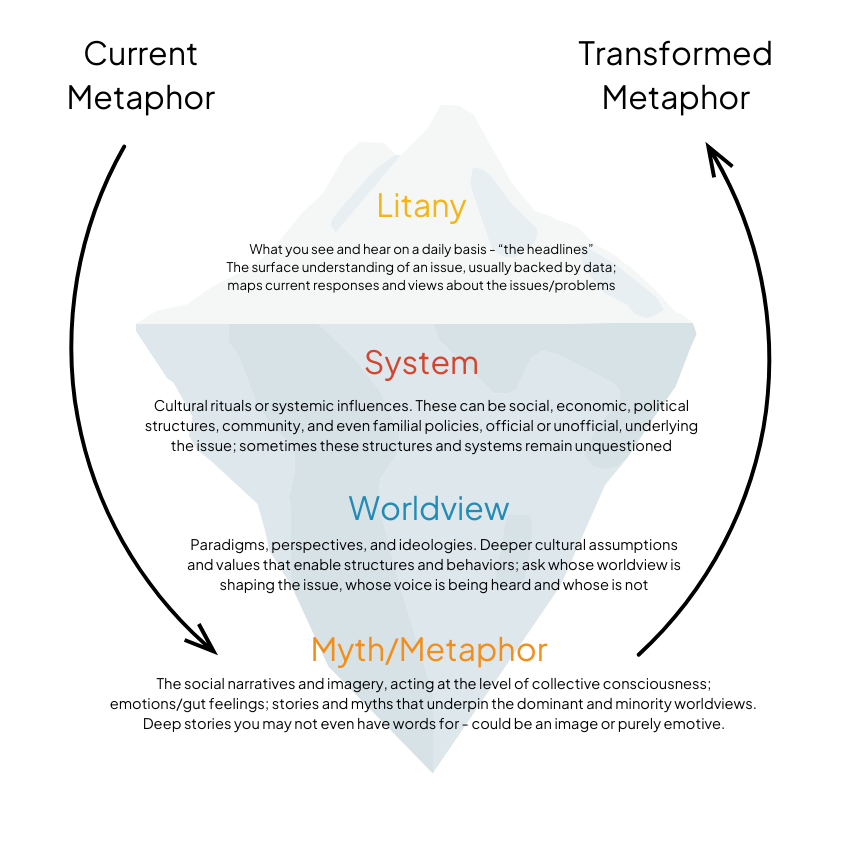
Causal Layered
Analysis (CLA)
Causal Layered Analyis, or CLA, is a qualitative methodology created by Professor Sohail Inaytullah, the first UNESCO Chair in Futures Studies. CLA facilitates deep analysis of complex issues at 4 levels: Litany, Systemic/Societal, Worldviews, and Myth/Metaphor. It can serve as a powerful tool for deconstructing and reconstructing scenarios for transformative change by facilitating the exploration of the real root causes of situations. We first used it to break down Probable and Desirable Futures and then explored Reframed Futures imaginaries using CLA. There are deep, human causes, often at the unconscious level underlying our most complex issues. By changing the deep myths and metaphors, we can bring about the most profound and enduring transformations.
In the FL Lab:
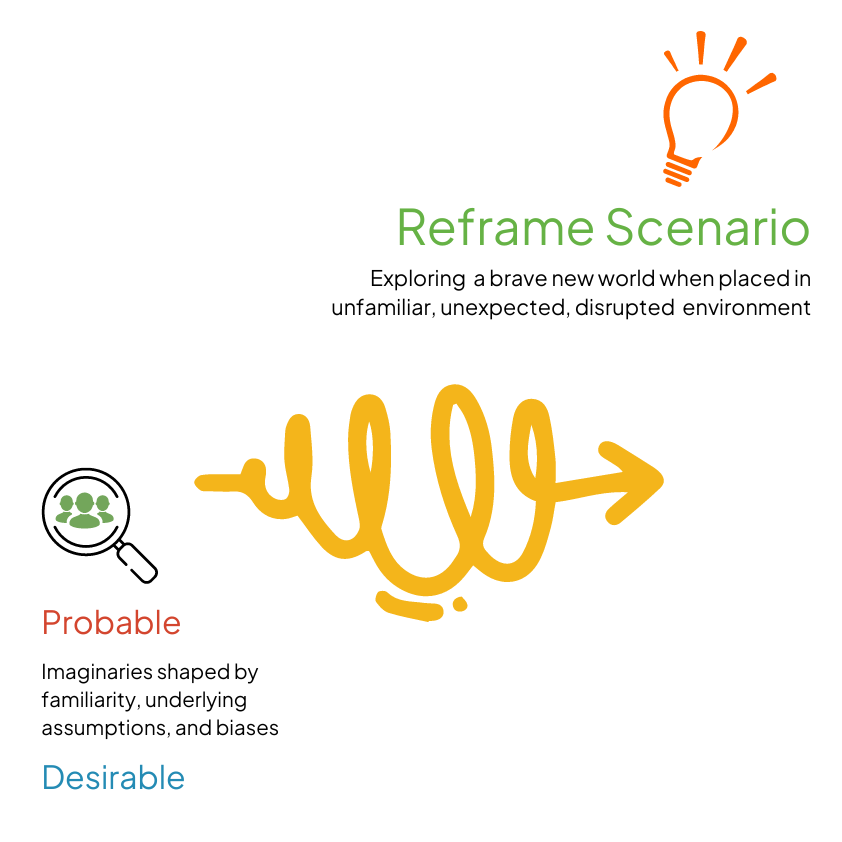
The Reframe
The Reframe serves as a playful provocation by encouraging youth to think, relate, innovate, and create beyond the confines of their current ways of imagining. The objective of the Reframe phase of FLL is to build collective intelligence by detaching from their images of probable (likely outcomes) or desirable (their current hopes). When participants find themselves in a completely unfamiliar world, their assumptions and biases are challenged resulting in greater novelty, adaptability, and creativity in their ways of thinking, knowing, being, doing, sensing and relating. By depicting a reframed future with alternative systems by creating a collective representation – for example, dramatisations, poetry, songs, or collages – they work together to build and express new images of the future in creative ways and strengthen their imagination skills.
Research Method:
Three Horizons Framework (3HF)
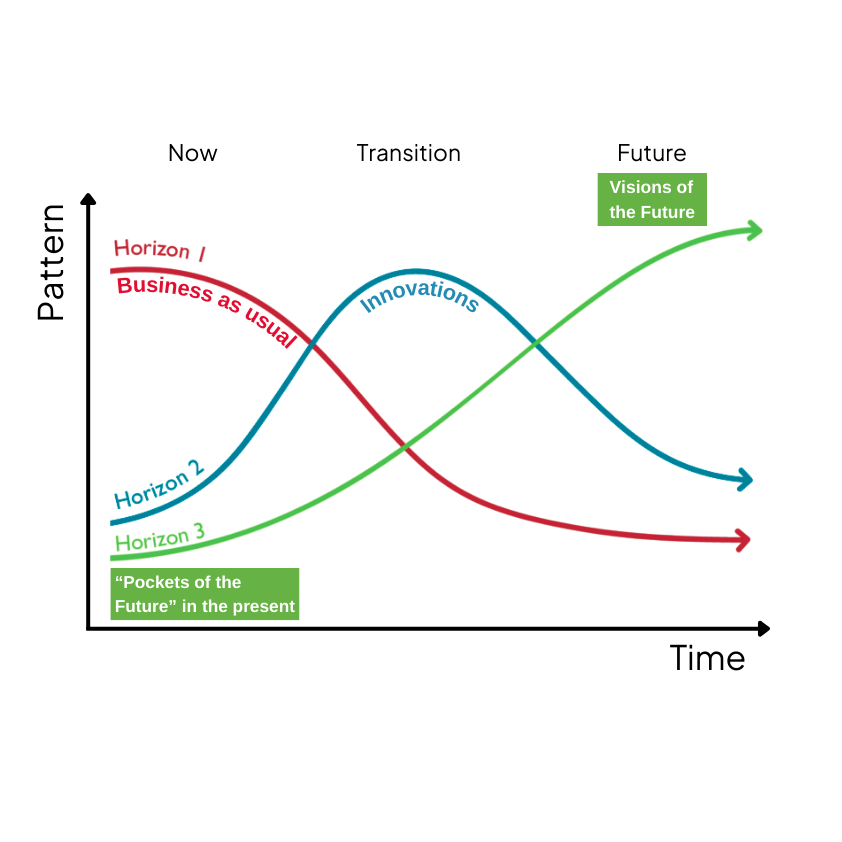
The Three Horizon Framework, pioneered by Bill Sharpe and Andrew Curry, offers a structured approach to tackling complex and uncertain issues by connecting the present with envisioned futures. It guides participants in understanding the inadequacies of current practices, exploring emerging trends’ potential impacts, envisioning ideal futures, and devising proactive strategies to bridge the gap.
Key aspects involve recognizing present inefficiencies, envisioning desirable futures, and strategizing visionary actions. Additionally, it emphasizes anticipating challenges and disruptions, aiming to facilitate smoother transitions. Overall, this framework empowers people to navigate transformative change by fostering critical thinking, strategic planning, and adaptive responses to future uncertainties.
Meet the project team
Learn more about our Youth Researchers







The Partners


Let’s work together